
Scandinavian Living Room: 30 Ideas for a Warm, Light Space
A Scandinavian-style living room brings together comfortable seating, natural textures, clear walkways, and good lighting where it’s needed. To create this look, start by arranging your furniture, choose a simple color scheme, add layered lighting, and include a few favorite items you enjoy.
You can go with white walls and a light sofa, but a charcoal sofa, a family cabinet, or a colorful rug work just as well. The main thing is to choose items that make daily life easier. While our guide covers the basics, these 30 ideas show how to use them in your living room.
Start with a layout that suits your room
Before shopping, measure your room, doorways, window locations, and any furniture you plan to keep. Also, mark the paths people use to move between the entrance, other rooms, and their seats. A corner sofa might look great, but it can be a hassle if it blocks the walkway.
The layout sketches show three different ways to arrange your space. The measurements are just examples and don’t define what counts as a small or large room. They assume a rectangular room with an entrance in the lower right corner, but you should adjust for things like fireplaces, radiators, door swings, and your household’s needs.

| Example room | Furniture shown | Why the arrangement works |
| Small: 3 × 4 m, about 9 ft 10 in × 13 ft 1 in | 180 × 85 cm sofa, 100 × 50 cm coffee table, shallow media unit | Seating sits along one side, leaving a 90 cm route beside it. There is no extra armchair to squeeze around. |
| Medium: 4 × 5 m, about 13 ft 1 in × 16 ft 5 in | 230 × 90 cm sofa, 120 × 60 cm coffee table, one 80 × 80 cm armchair | The chair faces into the group without occupying the route along the right wall. |
| Large: 5 × 6 m, about 16 ft 5 in × 19 ft 8 in | 280 × 100 cm sofa, 130 × 70 cm coffee table, two 85 × 85 cm chairs, separate reading chair | The sofa floats away from the wall, with conversation seating grouped on one rug and a second place to sit near the window. |
The drawings suggest leaving 40 cm between the sofa and coffee table, and a main walkway of 90 cm. Use these as starting points by taping lines on the floor, but adjust as needed. You might need more space for a walking stick, wheelchair, recliner, or sofa bed. Always check furniture in its fully opened position.
Scandinavian living room ideas for furniture and flow
1. Keep the best piece you already own
A standout piece, like an oak sideboard or a comfy navy sofa, can set the tone for your room. Let the color and size of these pieces guide your other choices before replacing them. Scandinavian style doesn’t require matching furniture sets—older pieces can add character to a simple setup.
2. Compare sofa footprints
Two sofas both called three-seaters can actually take up very different amounts of space. Compare their total width, depth, and arm thickness. In a narrow room, wide arms might take up space you could use for a lamp or to keep the walkway clear.
3. Give the main route its own space
Walk from the doorway to the far end of the room while someone is sitting there. If you have to turn sideways or step over their feet, move a piece of furniture before adding anything new. Keep the path clear of baskets, cords, and table corners.
4. Decide whether a chaise earns its floor area
A chaise only makes sense if you use it most evenings. If it blocks a door or makes it hard for someone else to sit comfortably, try a movable footstool instead. Measure the chaise’s length as carefully as you measure the sofa’s width.
5. Float seating in a generous room
If you put all the seats against the wall, the middle of the room feels empty and people have to talk across it. Instead, group the sofa and chairs closer together and leave a walkway behind or beside them. IKEA also shows that an L-shaped sofa can go in the center, freeing up wall space for storage.
6. Use a small table where a large one gets in the way
If your coffee table makes the seating area feel cramped, try a small oval table or two portable side tables instead. Make sure there’s enough space for things you actually use, like mugs, a book, or snacks. If you use a stool as a table, check that it’s stable first.
Color ideas for a warm Scandinavian living room
7. Start with the floor color
Floor coverings cover more space than most accessories, so put paint samples next to them when choosing cushions or curtains. An orange-toned wood floor and a cool grey wall might look good together, but you’ll only know for sure by testing paint samples.
8. Try a soft off-white instead of a stark white
If bright white looks too harsh with your furniture, try a warmer off-white instead. Manufacturer codes are listed below. When you check each sample in your room, you’ll notice that a color that looks creamy in one spot might look much grayer in another.
9. Give grey something warm to sit beside
If you like your grey sofa, keep it. Instead of adding more grey, try pairing it with an oak table, a wool rug, or rust-colored cushions. This contrast helps each material stand out, especially in rooms with little sunlight.
10. Repeat one accent color
You might use muted green in a cushion, a print, and a ceramic piece. These small touches can tie both sides of the room together. You don’t need matching shades or a strict formula—just stop when the color feels balanced.
11. Use a dark detail to give pale pieces definition
A pale room can feel more interesting if you add a black picture frame, a dark lamp base, or a deep brown chair. Start with a small item—sometimes just a few darker touches are enough, even without painting a wall or buying big dark furniture.
12. Test paint where you will see it
Put paint sample boards next to the window, sofa, and woodwork. Check them in daylight and under your usual lamps at night. Choose both the finish and color, and check the manufacturer’s instructions for surface type and cleaning needs.
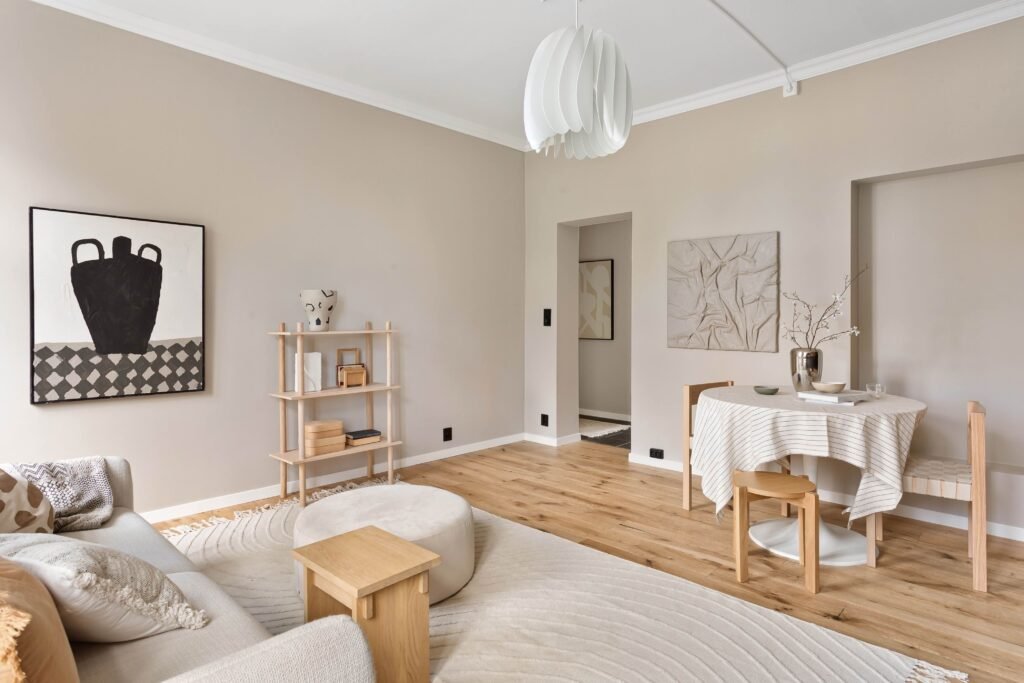
Paint color codes to sample
The identifiers given here are those of Farrow & Ball paints, not HEX codes or directions for mixing a colour from another brand; the colour descriptions are taken from the manufacturers’ pages and the combinations are merely suggestions for the article.
| Paint | Manufacturer code | Colour description | Pairing to try |
| School House White | No. 291 | Soft off-white | Oak, oatmeal fabric and a dark reading lamp |
| Skimming Stone | No. 241 | Stony off-white with warm light grey undertones | A charcoal sofa, cream rug and terracotta cushion |
| Mizzle | No. 266 | Soft grey-green | Pale timber, off-white curtains and woven texture |
Pick two paint colors to sample first. Neither the paint itself nor printed swatches will show you exactly how the color will look on your wall.
Lighting and textiles that make the room comfortable
13. Let curtains clear the window when open
If possible, extend the curtain rail so the fabric stacks beside the window glass. Make sure it doesn’t block nearby furniture. Choose privacy and light control based on your needs, since sheer curtains alone might not give enough privacy at night.
14. Put a reading light beside the reading seat
Sit in the chair before deciding where to put the lamp. An adjustable lamp can light your book without making the whole room brighter. Make sure you can reach the switch and the bulb doesn’t shine in your eyes.
15. Spread evening light around the room
Place a lamp by the sofa and another on a shelf or cabinet, and keep the ceiling light for tasks. Turn on each lamp one at a time to see how much light it adds. A warm-looking bulb is only helpful if it’s also bright enough for what you need.
16. Check reflections from the seats
Turn on the lamps and check the reflections in the TV and mirrors. If a lamp’s reflection is distracting, move it and check for glare from daylight before you decide where to put the TV. This quick test is easier than fixing the problem after everything is set up.
17. Let the rug connect the seating
If you put a small rug only under the coffee table, the furniture can look scattered. IKEA’s rug guidelines suggest placing the front legs of both the sofa and armchair on the rug. Before you buy, use tape to mark where the rug’s edges will go.
18. Choose texture for the way you live
A deep-pile rug might look nice, but think about crumbs, pet hair, and moving furniture. Check the care labels and use a good rug underlay. Even a flat-weave rug can add pattern and texture without being thick.
19. Mix fabrics without filling the sofa
Try mixing a woven cushion with a smoother one and keep a throw nearby. Make sure there’s enough space to sit without moving a pile of pillows. Washable covers are a good idea if you have snacks, kids, or pets around often.
20. Make a chair useful beyond the photograph
Make sure there’s space for a drink and a comfortable spot for whoever sits there. As our guide to hyggeat homeexplains, small rituals and taking time to relax matter just as much as the room’s design.
Storage and materials for everyday use
21. Combine open display with closed storage
Keep books and a favorite bowl on display, while chargers, games, and paperwork stay hidden behind doors. Before buying a cabinet, list what it needs to hold. Make sure the shelves are deep enough and the doors or drawers can open fully where you plan to put it.
22. Measure baskets against the objects inside them
Choose baskets that fit both the shelf and what you want to store. A deep basket works for tossed-in items, while toys are easier to find in several smaller containers. Our guide on affordable storage baskets covers different materials and how to use them.
23. Use timber where you will touch it
A wooden table leg or chair arm can add a nice touch to a simple room. Solid wood, veneer, and wood-effect finishes all need different care, so check the details. Not every wooden piece has to match in type or finish.
24. Keep a working surface clear
Before adding decorations to your coffee table, leave enough space for daily use. The table can also hold things that need to be put away elsewhere, so our simple decluttering tips can help you get started.
25. Give small electronics a place to land
Keep remotes in a shallow tray and store charging cables near the sockets you use. Run cables away from walkways. Cable organizers should allow equipment to ventilate and follow the equipment’s instructions.
Personal details that keep Scandi style from feeling bare
26. Let one piece of art carry a wall
A large print, whether it’s a textile or painting, can give a simple room a strong focal point without needing a whole gallery wall. Make a paper template of its size and shape and check how it looks from the sofa before hanging it. Keep smaller pictures if they matter to you.
27. Leave some shelf space unfilled
Group books and other favorite items together and leave some empty space between them. The gaps help each item stand out. Don’t buy decorations just to fill a shelf.
28. Choose a plant for the available light
Check what kind of light your plant needs and match it to the window and spot where you’ll put it. Leave space for watering, and consider kids or pets when choosing a plant. A plant that suits the room is better than a big one that won’t grow in a dark corner.
29. Allow somewhere for a current activity
Your room might have a knitting basket, puzzle board, or library books. It’s better to give these things a practical spot than to remove them just for looks. Scandinavian design works best when it fits the people who use the space.
30. Change one thing, then use the room
Try moving the lamp, shifting the sofa, or removing a table if it’s in the way. Live with the new setup for a few evenings before buying anything new. You’ll learn more from using the room than from just adding to your shopping list.
What is the way of making a small Scandinavian living room seem inviting?
Keep the amount of furniture reasonable and make sure each seat has a purpose. A small sofa, a useful lamp, and a well-sized rug can work better than a sofa and two chairs crowded around a table. Closed storage is helpful if the room also holds toys or work supplies. Check the setup with the door open and everyone seated.
Can a living room in a Scandinavian style have coloured or dark furniture?
Absolutely. Choose the pieces you like, then think about how they work with the light, floor, and other big surfaces. A dark sofa can look great with pale walls and a textured rug. Green walls also pair well with simple wood furniture. You don’t need an all-white room to use these ideas.
With a small budget, what should you alter first?
Begin by working with the layout and lamps you already have. Clear a path, move a reading light closer, and get rid of anything that makes a seat uncomfortable. If you want to spend money, pick the item that solves the biggest problem, like a good rug or storage for things that don’t have a place yet.
Sources
- IKEA: How to arrange an L-shaped sofa in your living room
- IKEA: Choosing the right rug
- Farrow & Ball: School House White No. 291
- Farrow & Ball: Skimming Stone No. 241
- Farrow & Ball: Mizzle No. 266
The layout sketches and suggested arrangements are illustrative plans created for this article. They are not photographs of completed rooms or measured surveys of existing homes.

Parker is a home and lifestyle writer at The Scandi Home, where they share a love for Scandinavian design, cozy living, and thoughtful interiors. Their writing focuses on simple, functional spaces that feel calm, warm, and lived-in.