
Japandi Living Room: 20 Ideas for a Serene Space
A Japandi style living room blends Japanese and Scandinavian design with simple furniture, natural textures, and a calm, comfortable layout. Begin by planning your seating and walking paths, then pick a few finishes that work with what you already have.
You might keep a dark sofa, take out an awkward table, or move a cabinet to give it more space. Our Japandi design guide covers the overall style in more detail.
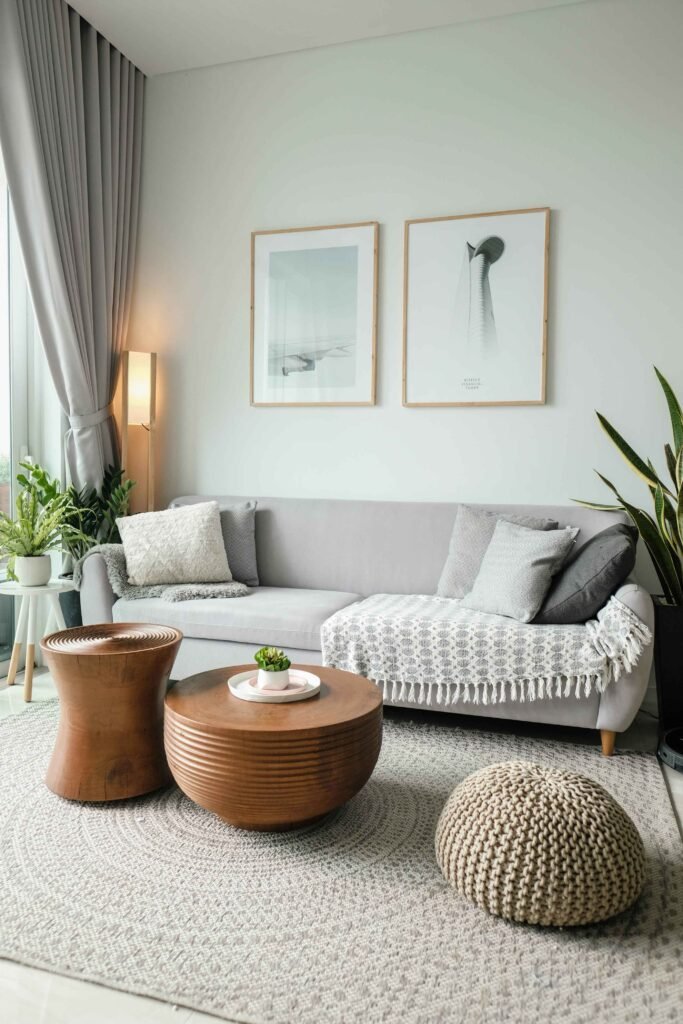
Plan the seating before buying accessories
1. Keep your most comfortable piece
Let the sofa or chair you use most often be the main piece in the room. Its color, size, and seat height will guide your other choices. You may end up with a different sofa than the one you first imagined.
2. Reserve a route through the room
Walk from the entrance to the window or next room and see how the space feels. Make sure tables, baskets, and lamp cords are not in the way. Try this while someone is sitting with their feet in a normal spot.
3. Compare two arrangements on paper
The original sketches show where to place furniture, not exact measurements. Adjust for things like radiators, fireplaces, door swings, and access. Our Scandinavian living room layouts show how this works.
Compact room concept: 3 × 4 meters
WINDOW SOFA clear route SOFA oval table SOFA clear route shallow storage ENTRY
Start with a 180 x 85cm sofa and a 90 x 45cm table. Mark where they will go and check if you can reach the table easily and move around the room.
Shared room concept: 4 × 5 meters
WINDOW ARMCHAIR low storage coffee table SOFA route behind seating — ENTRY
A 220 x 90cm sofa and a movable chair can set up your seating area, leaving a path behind. Only add more furniture after you’ve tried this setup.
4. Turn a chair towards the sofa
Turn one chair toward the conversation instead of pointing every seat at the TV. Try sitting in both spots to make sure people can talk easily without twisting or leaning around a lamp.
5. Test furniture heights together
Low furniture gives the room a calm, even look, but try sitting, standing, and reaching before you buy. IKEA’s sofa guide suggests a seat height of 40–45 cm, but your comfort is more important than matching that exactly.
| Piece | Starting point to compare | Practical test |
| Sofa or armchair | Seat around 40–45 cm high | Feet feel supported; standing up is comfortable |
| Coffee table | Around seat-cushion height | Reach a mug without an awkward bend |
| Side table | Compare with the occupied chair’s arm | Put down a drink without lifting your shoulder |
| Media cabinet | Choose with the screen and seating | Check viewing position from the actual sofa |
IKEA’s coffee-table guide recommends a height close to your seat cushion, usually about 41–46 cm. Measure your own sofa, including how much the cushion sinks when you sit.
Build a palette with depth
6. Begin with the floor
Put your paint and fabric samples next to the floor you plan to keep. Check them in daylight and under your evening lights. A small fabric sample alone won’t show you much compared to seeing everything together.
7. Choose one leading timber tone
Let the biggest piece of wood in the room guide your choices. Other woods will look different, so compare their tones. Don’t buy several similar finishes before you see how they look with your floor.
8. Add one darker detail
Try adding a charcoal frame, a dark brown table, or a dark lamp to a light room. Only add more dark pieces if the space needs it. You can test the look with items you already own.
9. Give color a clear place
Muted olive, clay, or blue all work well. Try using color in a large textile or on one wall, and keep the rest of the room more neutral so there’s a clear focal point.
10. Compare smooth and woven surfaces
A plain sofa, textured cushion and glazed bowl are all surfaces in themselves without any pattern. The Japandi IKEA guide points to timber, textiles and ceramics as some of the key materials. Pick the versions that are appropriate for your household in terms of care.
Make storage and display useful
11. Measure the things you store
Look at what you need to store, like board games, paperwork, or electronics, before choosing a cabinet. Shelves are more useful if they fit your things. Make sure you can reach the sockets and follow any ventilation instructions for your equipment.
12. Leave a gap on the shelf
Group your books or favorite items together and leave some open space next to them. Stop adding things when each group is easy to see. You don’t need to fill empty spaces with new items.
13. Keep one personal focal point
A special bowl or a colorful print can bring character to your room. Place it where you can see it from your usual seat, and arrange other items to give it space.
14. Plan somewhere for current activities
Keep your knitting, library books, or a puzzle close to your seating area. Choose storage you can use without moving furniture. Set up the room to fit how you really spend your evenings.
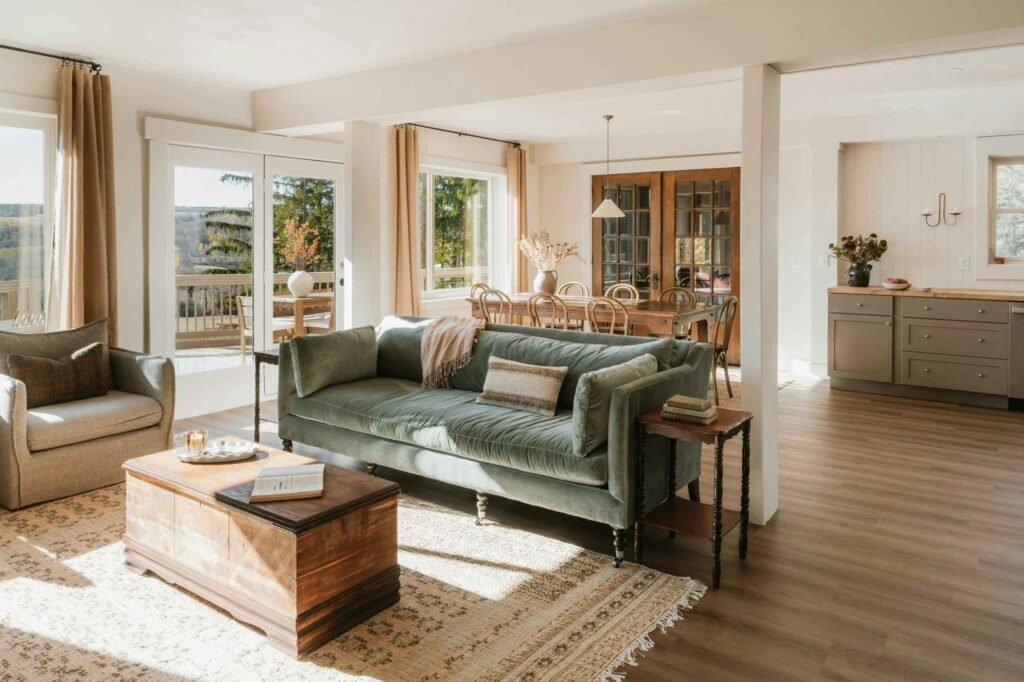
Soften the room through light and textiles
15. Put light beside the reader
Place the lamp so it lights your book but doesn’t shine in your eyes. Test it while sitting down. A lamp across the room can add mood but won’t help you read.
16. Check the television reflections
Turn on your lamps after dark and sit at both ends of the sofa. Move any lights that reflect on the TV screen. Our hygge living room lighting plan covers different evening activities.
17. Mark the rug before ordering
Use removable tape to outline where the rug will go around your seating area. Make sure doors can open and there’s a clear path through the room. Choose a rug texture that’s easy to keep clean where people eat, play, and sit.
18. Let curtains open fully
If possible, keep curtains pulled back against the glass to let in more daylight. After sunset, check if you still have enough privacy. Decide how you’ll arrange the curtains for both light and privacy before choosing a color.
19. Keep the useful cushion
Keep the cushions that support your back or make the seat more comfortable. Remove any you always end up putting on the floor. One comfortable setup is enough; your sofa doesn’t need every texture.
20. Live with one change first
Try moving the table, changing a lamp’s spot, or clearing a path, then use the room for a few evenings. Notice what still gets in the way of reading or talking. Only spend money on fixing the problems you find.
Sources
- IKEA: Japandi style
- IKEA France: Choosing sofa dimensions — French-language guidance.
- IKEA Australia: Coffee-table size and height guidance

Parker is a home and lifestyle writer at The Scandi Home, where they share a love for Scandinavian design, cozy living, and thoughtful interiors. Their writing focuses on simple, functional spaces that feel calm, warm, and lived-in.