
Japandi Dining Room: Ideas & Furniture Guide
You can fit four chairs around the table, but keep in mind that pulling one out might block the kitchen door. Before choosing a pendant light or buying another ceramic bowl, try out the dining area with people actually sitting in it.
A Japandi dining room focuses on simple furniture, natural materials, and a minimal approach to display. Start with a table that works well for everyday meals, chairs you find comfortable, and enough space to move around. Then, choose your color scheme based on the floor and the furniture you plan to keep.
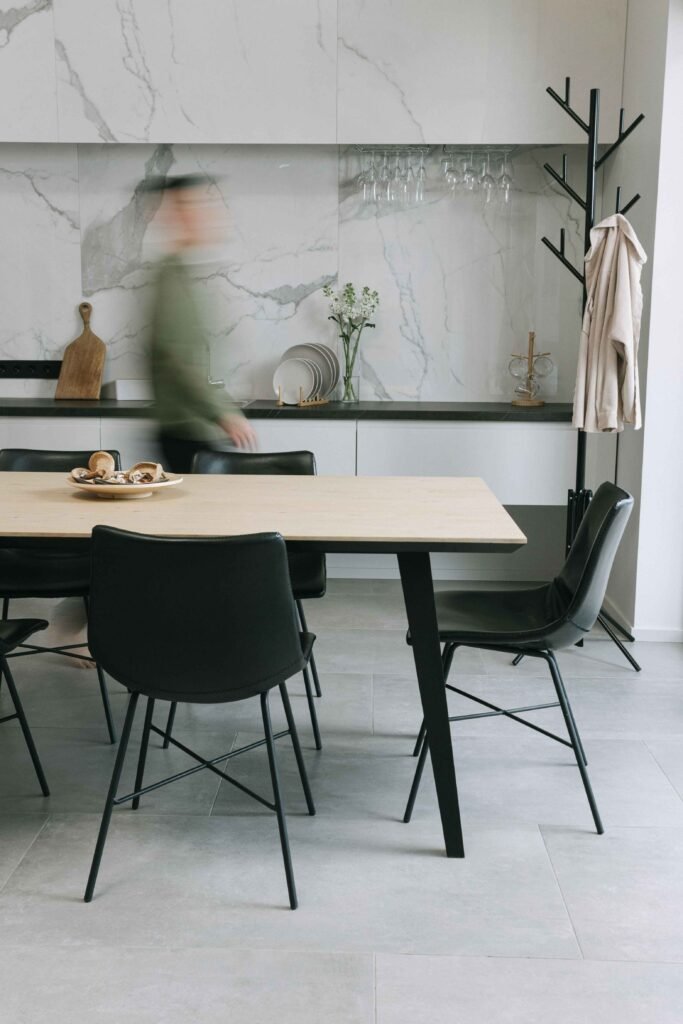
Give the room a few clear priorities
This Japandi design guide explores how Japanese and Scandinavian styles come together. In the dining area, this means using simple shapes, choosing materials you can see and appreciate, and making sure there is enough space around the furniture for comfortable use.
You don’t need a matching set or an empty tabletop. A dark family table can look good with light chairs and an oatmeal curtain. If your painted sideboard is the right size and offers enough storage, it can stay. Decide which existing piece will set the tone for the room before buying anything else.
Start by thinking about how you use the space every day. If only two people usually eat there, do you really need six chairs around the table all the time? If the table is also used for homework, make sure there’s space nearby for books and other items so you don’t have to clear them away before dinner.
Match the table shape to the available floor
Mark out the full size of the tabletop on the floor, including any extensions. Place the actual chairs, pull them back, and open any nearby drawers or doors. Make sure there’s a clear path from the kitchen to each seat, even when someone is carrying a plate.
A rectangular table works well in a long, narrow room. A round table changes how people face each other, but you’ll still need space for chairs all around. Check under the table—whether it has a pedestal, corner legs, or a deep rail, these details affect where people can put their knees and feet.
Our Scandinavian dining table comparison covers different sizes and constructions. Begin by narrowing down your options based on dimensions, then compare the finishes.
For example, you might test a room with a 180 x 90cm table, adding 90cm on each side, so the area needed is 360 x 270cm. This is just for planning, not a strict rule. If you have a sideboard, an occupied chair, or someone using mobility equipment, you may need a different layout and more space.
Three table-and-chair pairings to explore
These IKEA combinations show different takes on the style. They are based on the manufacturer’s published sets, checked on 27 November 2026, and not products we’ve tested ourselves. Table dimensions are approximate conversions from US listings. Always check local availability and exact specifications before ordering.
| Table and chair pairing | Table footprint | Why consider it? | Detail to check |
| VOXLÖV table with four VOXLÖV chairs, bamboo | About 180 × 90 cm | Pale bamboo and woven chair surfaces introduce texture without another decorative layer. | The tabletop is bamboo veneer over particleboard; it is not solid bamboo throughout. |
| VOXLÖV table with four KRYLBO chairs, Tonerud blue | About 180 × 90 cm | Blue upholstery provides a deliberate colour accent beside the pale table. | The chair cover is non-removable and cannot be washed; compare care needs with your household. |
| NORDVIKEN drop-leaf table with two SKOGSTA chairs, white/acacia | About 74–104 × 74 cm | A painted table and timber chairs create a compact, mixed-finish scheme. | Test the leaf in both positions and check where chair legs sit beneath the smaller top. |
The first two pairings show how swapping out the chairs can change the look of the same table. Woven seats add texture, while upholstered blue chairs bring in more color. You don’t need to match blue or woven accessories throughout the room for either option.
Before buying, try sitting in the combination you’re considering. Check the seat depth, back support, and space under the table rail. If you plan to use a seat cushion, include it when testing. Just because the manufacturer pairs items together doesn’t mean they’ll be comfortable for everyone.
Make materials work together without matching everything
Pick one main wood tone, then compare other samples to it. If you have a honey-toned floor, consider warm white walls and subtle fabrics. With a dark table, pale upholstery or painted storage can help the furniture stand out.
Carefully read the construction details. Veneer, solid wood, and printed wood finishes may look similar online, but they are different materials. Always follow the care instructions for your specific surface, especially when using cleaners or protecting it from hot dishes.
Put patterns where you enjoy them most. If your table has a strong grain, you might not need anything else. A plain painted table can easily handle patterned napkins and a decorative bowl.
If you’re adding a rug, pull the chairs all the way out to figure out the right size. Make sure the chair legs move easily over the rug and that it’s easy to clean after meals.
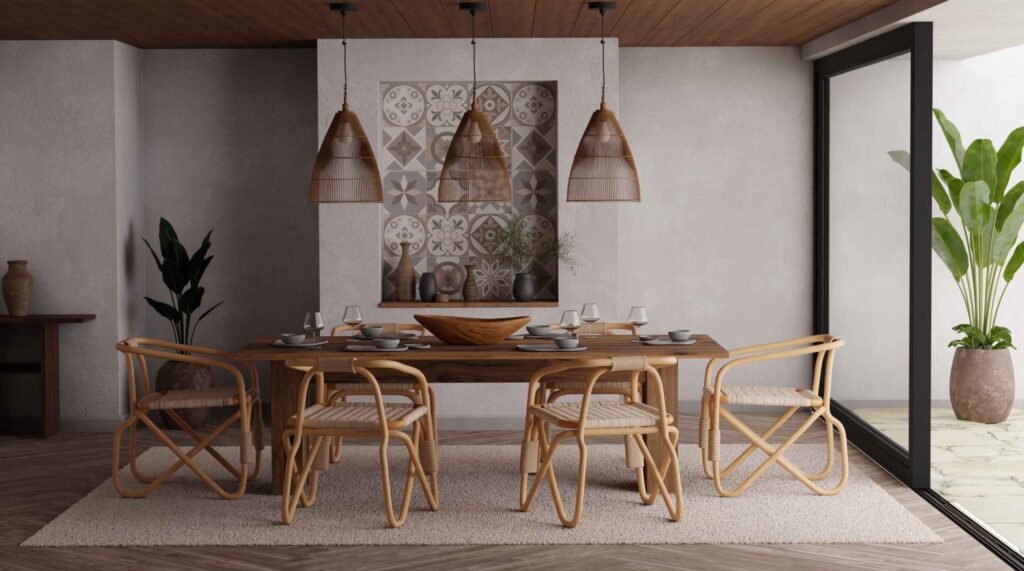
Light faces as well as the tabletop
Decide on the table’s position before thinking about where to hang the pendant light. Sit across from someone and see if the shade blocks your view. Also, check the lighting from the end seats, especially if the table is long.
If the area around the sideboard is dark, add a separate lamp there. Our Scandinavian dining room guide covers both furniture layout and lighting. Make sure switches are easy to reach and cords don’t get in the way.
Leave the table ready for dinner
Keep your everyday plates, napkins, and serving pieces somewhere easy to reach. Use the sideboard as a practical spot for dishes, not just for display items.
Pick a low centerpiece that’s easy to move, then set out your usual place settings. Pull back each chair, carry dinner through the room, and see what gets in the way. Fix any issues before adding more accessories.
Sources
- IKEA US: VOXLÖV / VOXLÖV dining set — paired components, table dimensions and material construction.
- IKEA US: VOXLÖV / KRYLBO dining set — dimensions, upholstery and non-removable-cover care.
- IKEA US: NORDVIKEN / SKOGSTA dining set — drop-leaf dimensions, finishes and paired components.

The Scandi Home editorial team researches and writes our guides to Scandinavian, Japandi and hygge interiors. Practical advice such as measurements, lighting heights and materials is based on published guidance from manufacturers and designers, with sources listed at the end of each article.