
Scandinavian Bedroom: Ideas for a Calm, Minimal Sleep Space
A Scandinavian bedroom focuses on a comfortable bed, practical storage, simple furniture, and soft textures. The space should be easy to use. Begin by making sure you can move easily around the bed and decide where you want the light. Then, choose your color scheme based on the furniture and bedding you already enjoy.
If you have to move a pile of cushions just to get into bed, it’s a sign you can simplify. The essentials are a reading lamp, a bedside drawer, and curtains for privacy. While our Scandinavian interior design guide covers the broader style, here the focus is on making it easy to get dressed, read, and rest.
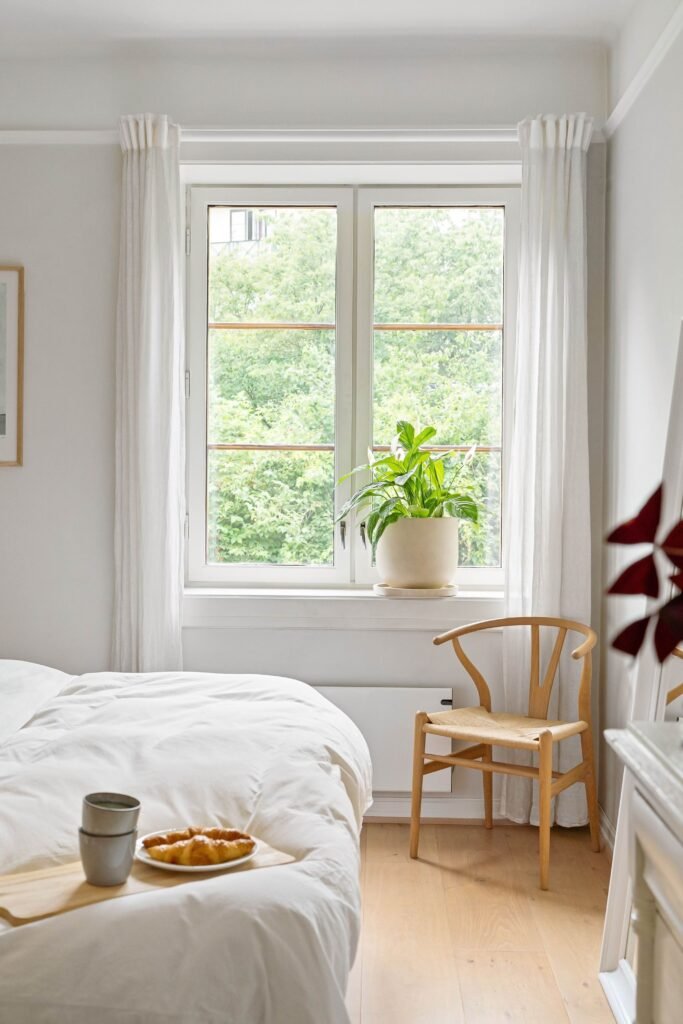
What makes a bedroom feel Scandinavian?
Light wood, simple furniture lines, and a calm color palette are key to the Scandinavian look. Comfort comes from the details, like a headboard that supports you when you sit, bedding that feels good, and a spot for your water glass that doesn’t require balancing it on a book.
You can add color and mix in older pieces. For example, a painted chest of drawers works well with a plain wooden bed. A blue duvet might be the only color in an otherwise muted room. Choose a few materials and repeat them, but always leave enough space to move around and use your furniture comfortably.
Arrange the bed before choosing accessories
Measure the entire bed frame, including the headboard and any corners that stick out. Just knowing the mattress size isn’t enough to see if it will fit. Mark out the bed’s footprint, then check the path from the door to the bed, wardrobe, and window.
For example, a 160cm wide bed frame placed in the center of a 320cm wide room leaves 80cm on each side before adding other furniture. This is a good starting point, but if you have a chest of drawers next to the bed, the space changes. Measure the chest’s depth with the drawer open and make sure there’s enough room for everyone to move comfortably.
In a shared bedroom, it’s best to have access on both sides of the bed if possible. If one side is against the wall, keep the other side clear and make sure you can still change the sheets. Choose bedside tables after you’ve figured out the best routes. Sometimes a narrow drawer or a fitted shelf is more practical than two wide matching tables.
Bed height matters too. A low frame might look great, but make sure it’s comfortable for you to sit down and stand up. Don’t forget to include the mattress thickness when checking the final height.
Build a warm palette from the floor upwards
Start by looking at the floor and the biggest piece of furniture. Honey-colored pine, pale oak, or dark walnut floors each suggest different color combinations. Bring paint and fabric samples into the room instead of choosing everything from online images.
Three Scandinavian bedroom ideas to try are:
- Pale timber and oatmeal: soft off-white walls, visible wood grain, white bedding and a textured beige throw.
- White and muted green: white furniture, a gentle green wall colour, smooth white bedding and some small dark details.
- Charcoal and cream: keep a dark bed or wardrobe and then soften the room with cream textiles and a lighter wall colour.
You can use a timber finish or accent color from one room in another, without needing to buy matching furniture. Scandinavian living room ideas often mix grey upholstery with warmer materials, and it’s always a good idea to test colors in different lighting.
Add contrast to help objects stand out, like placing a dark lamp next to pale bedding or a wooden frame against a painted wall. A room with some variety feels more personal than one where everything is the same shade of white.
Two Scandinavian bedroom mood boards with product links
The boards below show the original color palettes. The drawings give you an idea of each style, and the product links show specific materials and shapes. These are styling examples based on manufacturer details, not products tested in this article. You can use the same combinations with furniture you already own.
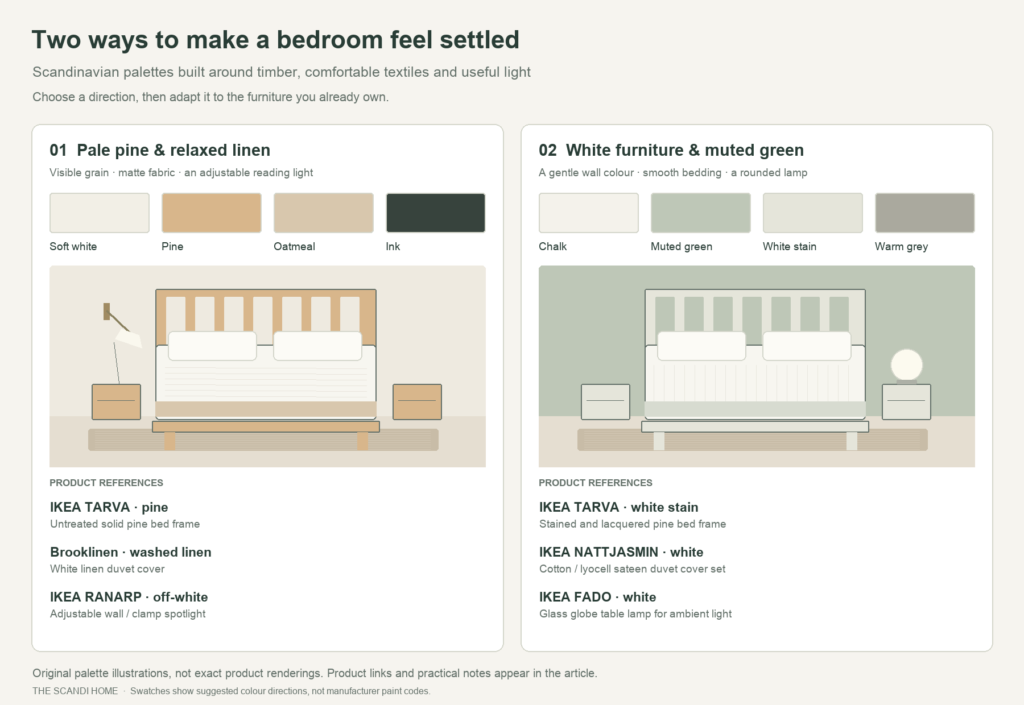
Mood board 1: pale pine, white linen and oatmeal
Let the timber stand out by using plain white bedding and adding a warm textile at the foot of the bed. Place an adjustable reading light next to the softer fabric for both style and function.
| Element | Product reference | What it contributes |
| Visible timber | IKEA TARVA queen bed frame in pine | Solid, untreated pine with visible grain and a simple slatted headboard. |
| Relaxed bedding | Brooklinen Washed European Linen Duvet Cover | Flax-based linen with a garment-washed finish; choose white for this scheme. |
| Reading light | IKEA RANARP wall/clamp spotlight in off-white | An adjustable head that can direct light onto a book; check the mounting requirements for your chosen position. |
Bring in oatmeal tones with a throw or rug you already own. Keep your bedside surface clear so there’s space for a drink and anything you need at night. If you leave the pine untreated, follow the manufacturer’s care instructions, since finishing it will change how it looks.
Mood board 2: white furniture, muted green and smooth bedding
Paint the walls a muted green and keep the bed and duvet white. Add a rounded lamp to break up the straight lines of the bed frame. Always test green paint samples against the floor before painting.
| Element | Product reference | What it contributes |
| Pale furniture | IKEA TARVA queen bed frame in white stain | Solid pine with a stained and lacquered finish for a lighter furniture palette. |
| Smooth bedding | IKEA NATTJASMIN white duvet cover set | Subtle stripes in a sateen weave, made from 60% cotton and 40% lyocell. |
| Ambient light | IKEA FADO white table lamp | A rounded glass shade for general mood lighting; its 10-inch diameter needs a suitably sized surface. |
If you like to read in bed, make sure your book has its own light. A decorative globe lamp works well for this. The linked bed frames need a central support beam, and the mattress and slatted base are sold separately, so check what’s included. The lamp links don’t include bulbs. Since the product links are for US stores, check local sizes and availability.
What bedding fabric is best for a Scandinavian style bedroom?
Pick bedding based on how it feels to you and how much care you want to give it. The terms can be confusing: cotton and linen are types of fibers, while percale and sateen are types of weaves. So, cotton bedding can be either percale or sateen.
Brooklinen’s fabric guide says their cotton percale is crisp and matte, sateen is smooth and drapes well, and washed linen feels relaxed and textured. These are helpful starting points, but keep in mind that fabrics can vary between products.
| Fabric or construction | Typical surface and appearance | Choose it if… | What to check |
| Cotton percale | Crisp feel and a matte finish | You like bedding with some structure | Fibre content, fitted-sheet depth and care instructions; percale is the weave, rather than a guarantee of quality. |
| Cotton sateen | Smooth surface with a subtle sheen and more drape | You prefer a smoother, less crisp feel | The actual fabric feel and care label; a sheen may be more noticeable under bedside lighting. |
| Washed linen | Visible texture and a relaxed finish | You like a less formal-looking bed | Whether you enjoy the texture against your skin and the product’s washing and drying requirements. |
| Cotton/lyocell sateen blend | Smooth, lustrous surface in the NATTJASMIN example | You want the striped, smooth bedding used in mood board 2 | Exact blend percentages and duvet dimensions; other blended products can feel different. |
If you want to try a new fabric, start by buying just the pillowcases before replacing your whole set. Always check the duvet cover’s measurements against your insert, especially if you’re buying from another country, since two products labeled “queen” can be very different in size.
Keep your bedding layers simple: just sheets, a duvet or blanket, your sleeping pillows, and maybe one extra throw. The warmth of your bed depends on the duvet filling, room temperature, and how many layers you use.
Give daylight and darkness separate jobs
During the day, pull the curtains away from the window to let in light. For privacy and light control at night, use a blind, a curtain, or both, depending on what works for your window. Sheer curtains look soft, but check how much you can see through them at night.
The NHLBI’s healthy sleep guidelines recommend a quiet, cool, dark bedroom and a dim night light if required. A pale décor will work in conjunction with curtains that block out the outside light. The look of the room in itself is not what determines your quality of sleep.
Put reading lights near your pillows so you can reach the switch and light your book without shining the bulb in your eyes or your partner’s face. Use a general light for dressing and cleaning. Before installing anything, check the sockets, cable routes, and instructions.
Use storage to make the room easier to reset
Keep your clothes near where you get dressed and your laundry basket close to where you change. If clean clothes often end up on a chair, check if your drawers are too full or hard to reach. You might need a bigger wardrobe, but first see if your current space can fit what you use. These simple steps help declutter and organize your bedroom.
Use under-bed boxes for spare bedding, as long as they fit under the frame and are easy to reach. Measure the height and clearance needed to pull the box out. Closed bedside storage is good for chargers and small items, but keep the top open for things you need at night.
If your bedroom has a desk, store work supplies in their own drawer or cupboard. In a small room with many uses, it helps to give each activity its own storage space.
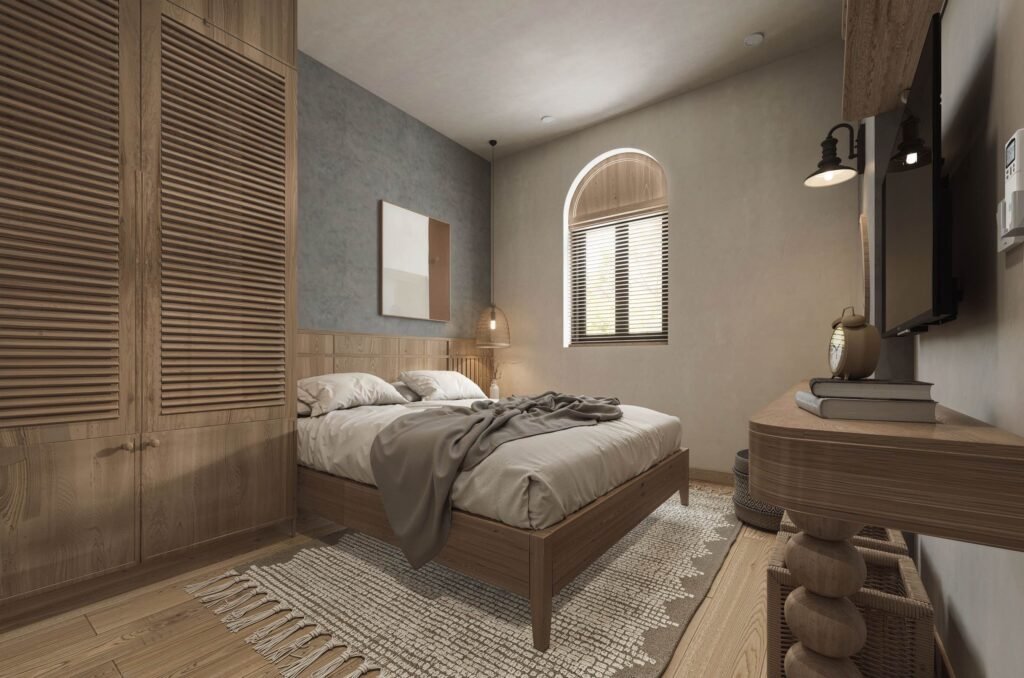
Add warmth through a few personal details
A rug by the bed, a piece of art, and a favorite quilt can add character to a simple room. Make sure the rug is secure and doesn’t block the door, and place it where your feet will land. Hang art where you can see it from the bed or door, and always follow the right instructions for hanging.
For a quiet evening, arrange your room around what you enjoy. Keep a lamp and book within reach, have a spot for your glasses, and choose bedding that feels good to get into. This is what the hygge guide means by bringing calm, unhurried moments into your home.
Begin tonight by organizing your bedside area. Move anything that doesn’t belong, make space for a drink, and check if your reading light works from your pillow. These small changes will help you see which bigger updates are worth making.
Sources
- IKEA: TARVA bed frame in pine and white stain
- IKEA: NATTJASMIN duvet cover set
- IKEA: RANARP wall/clamp spotlight and FADO table lamp
- Brooklinen: Washed European Linen Duvet Cover and fabric comparison
- NHLBI: Healthy Sleep Habits

Parker is a home and lifestyle writer at The Scandi Home, where they share a love for Scandinavian design, cozy living, and thoughtful interiors. Their writing focuses on simple, functional spaces that feel calm, warm, and lived-in.