
Japandi Bedroom: Ideas for a Minimal, Restful Room
A low wooden bed can look roomy in photos, but its corners near your wardrobe might leave little space to walk. Before choosing that bed, mark its size on the floor and open every drawer to check space.
A Japandi bedroom focuses on simple furniture, natural textures, calm colors, and practical storage. Begin with a comfortable bed and clear pathways, then add warmth with wood, fabric, and lighting. A bed you like is a great starting point.
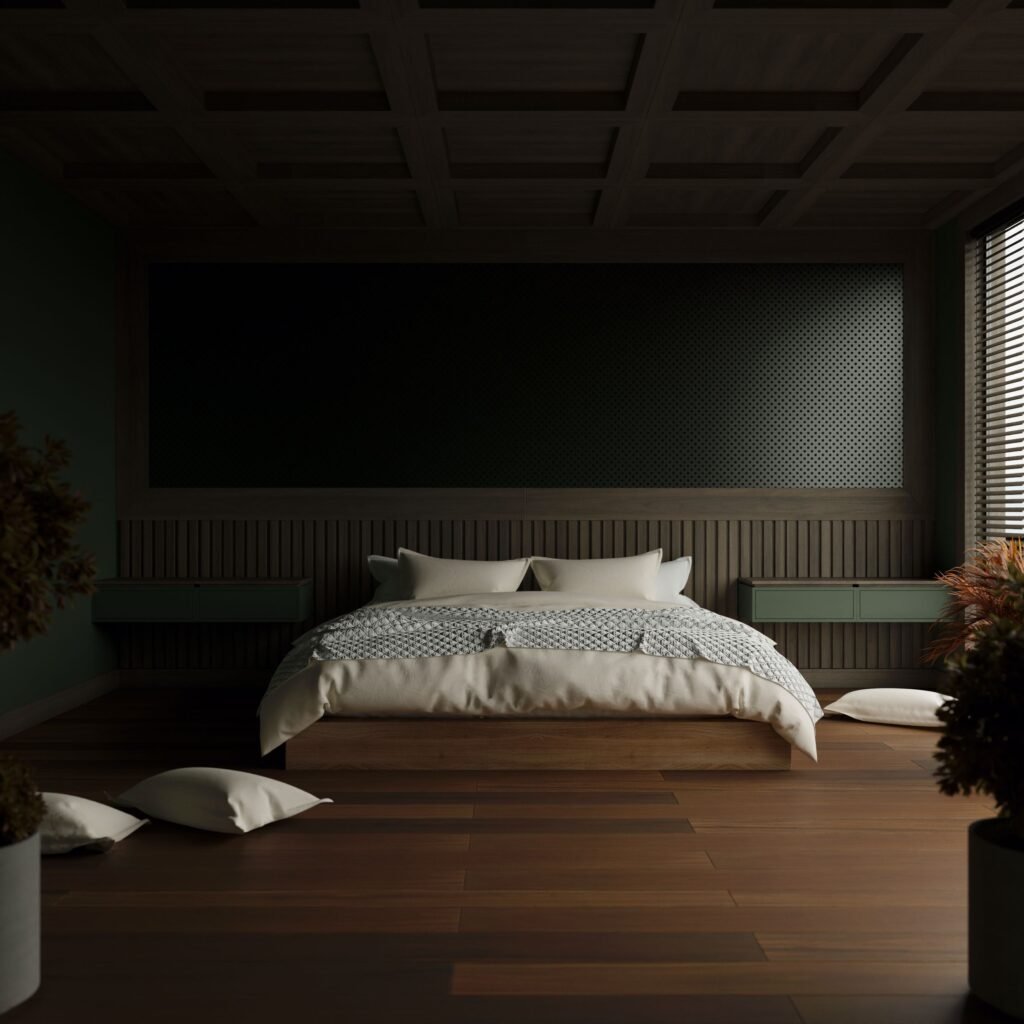
Choose a direction from the room you have
Our Japandi design guide explores how Japanese and Scandinavian styles blend together. For a Japandi bedroom, focus on clean-lined furniture, pleasant materials, and practical spots for your clothes and bedside items.
Begin with the biggest finish in your room. If you have a pale oak floor, you might choose warm white walls, oatmeal bedding, and a dark lamp. With a walnut wardrobe, cream fabrics and muted olive work better than adding another wood finish.
Look at your samples in the room, on the floor, and under evening light. Not every surface has to be beige. A blue quilt or a painted chest can stand out as the main color without clashing with other accents.
Compare platform beds by footprint and height
“Platform” means the bed’s support system, but it doesn’t tell you how low the mattress will be. Check the support height, mattress recess, and your mattress thickness together. Try sitting and standing at the same height as the bed before you buy.
These three Tatami Room examples have different proportions. The sizes are based on the manufacturer’s US Queen specs (checked 23 Nov 2026) for frames without the optional headboard. This is just a comparison of specifications, not a hands-on test.
| Platform style and example | Overall frame dimensions, width × length × height | Under-frame clearance | Decision it helps you make |
| Low, projecting platform: Tatami Platform Bed, natural finish | 66 × 86 × 9 inches | 4 inches | Creates a low outline, but the surrounding frame occupies more floor than the mattress opening. |
| Taller, projecting platform: Tall Tatami Platform Bed, honey oak | 66 × 86 × 15 inches | 10 inches | Keeps the broad frame while raising it; check the finished mattress height and storage access. |
| Taller, mattress-footprint platform: Tall Wakayama, natural finish | 60 × 80 × 15 inches | 9 inches | Uses less floor width and length than the projecting examples; adding its headboard changes the overall length. |
The two Tatami models list a 2″ mattress recess. The frame heights given are not the same as the sleeping surface height. “Honey oak” is just the finish name; the manufacturer says the frame is solid parawood, not oak.
Both the low and tall projecting frames take up the same floor space. The lower frame doesn’t save any room. In a 126″ wide room, a 66″ frame in the center leaves 30″ on each side before the furniture. A 60″ frame leaves 33″ on each side. These are just layout examples, not official standards.
Check the mattress maker’s support needs against your chosen base, including slat spacing. Also, make sure all parts are included and that you can get the base delivered before you pay.
Arrange bedside pieces after the bed
Measure from the floor to the top of your mattress, then check where your hand naturally reaches for a glass or light switch. A low table next to a thick mattress can make it awkward to reach down.
Choose bedside pieces that fit your needs and space. One person may want a drawer for medication and chargers, while another might like a small shelf. Our Scandinavian bedroom furniture guide covers bed, storage, and nightstand sizes.
Remember the platform edges when placing tables. Leave enough space so you can change the sheets without moving heavy furniture every time.
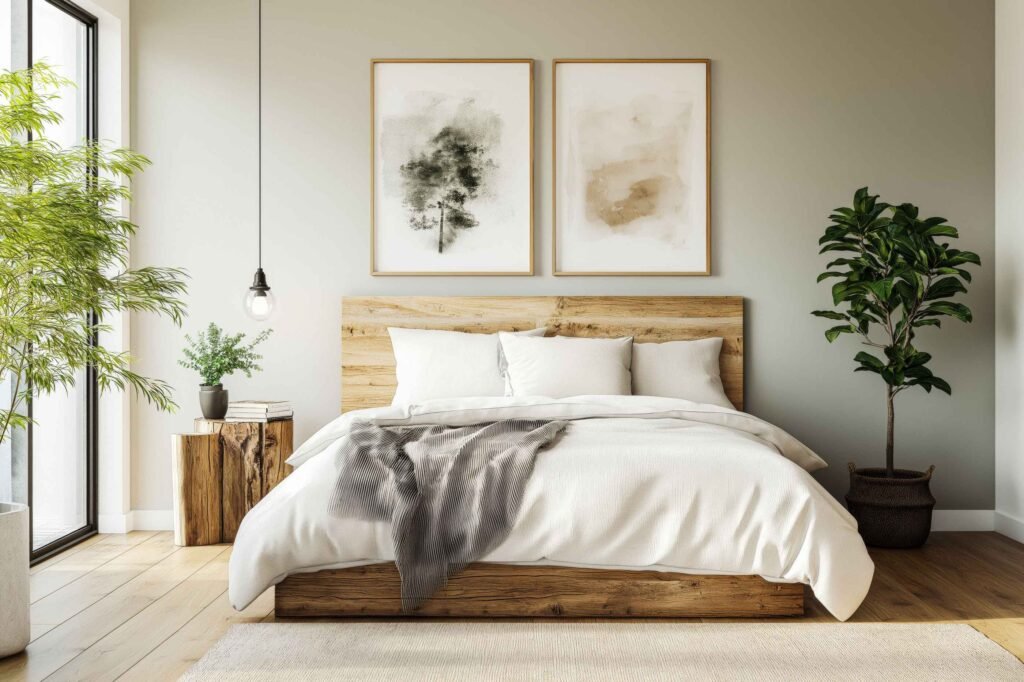
Let textiles supply the softer details
Start with bedding you enjoy against your skin, then add other layers. Plain sheets, a duvet or blanket, and one textured throw can add depth to the bed without piling on lots of decorative cushions.
Pick curtains for privacy and light control, not just looks. Test them at night with the lights on, since sheer fabric might show more than you expect. Our Scandinavian bedroom ideas go into more detail on bedding and window treatments.
Put a rug where your feet land when you enter the room, keeping its edges away from doors and drawers. If a big rug makes cleaning or moving furniture hard, a smaller, secure rug might work better.
Keep light and storage within reach
Position your reading lights based on where your pillow usually is. Aim the light at your book and check if the bulb shines in your eyes or your partner’s. Make sure general lighting for dressing and cleaning has easy-to-reach switches.
Closed storage is best if you want to keep things off chairs. Put the laundry basket where you take off your clothes, and keep a drawer handy for clothes you’ll wear again. Open shelves are great if you want to see everything at a glance.
If your bedroom has a desk, give work supplies their own drawer or cupboard. It’s easier to keep the desk clear at night if papers have a place. Wait to buy a decorative screen until you’re sure there’s enough space to move between the desk and bed.
Add one personal touch, like a print, a handmade bowl, or a favorite quilt. Before adding more, live in the room for a week. Make sure you can reach the lamp, open the wardrobe, and put clothes away without disrupting the setup.
Keep reading
Sources
- Tatami Room: Tatami Platform Bed, natural finish — queen dimensions, mattress recess and clearance.
- Tatami Room: Tall Tatami Platform Bed, honey oak — queen dimensions, parawood construction, recess and clearance.
- Tatami Room: Tall Wakayama Platform Bed, natural finish — queen footprint, clearance and optional-headboard dimensions.

The Scandi Home editorial team researches and writes our guides to Scandinavian, Japandi and hygge interiors. Practical advice such as measurements, lighting heights and materials is based on published guidance from manufacturers and designers, with sources listed at the end of each article.