
Why Does Anxiety Get Worse at Night? Causes & Relief
As the world outside dims and shadows stretch across your room, a profound stillness takes over. The ticking of the clock resounds in the thickening darkness, accentuating the quiet of your space. If you feel calm during the day but overwhelmed at night, you’re not alone. Many notice that anxious thoughts, a racing heart, and trouble falling asleep feel more intense after dark when the world around you goes silent.
Nighttime anxiety can feel exhausting, but it’s common, explainable, and manageable. In this article, we’ll explore why anxiety often worsens at night, how it affects sleep, and strategies to calm your mind before bed. You’ll walk away with a deeper understanding of nighttime anxiety and practical steps to ease your mind and improve your sleep.
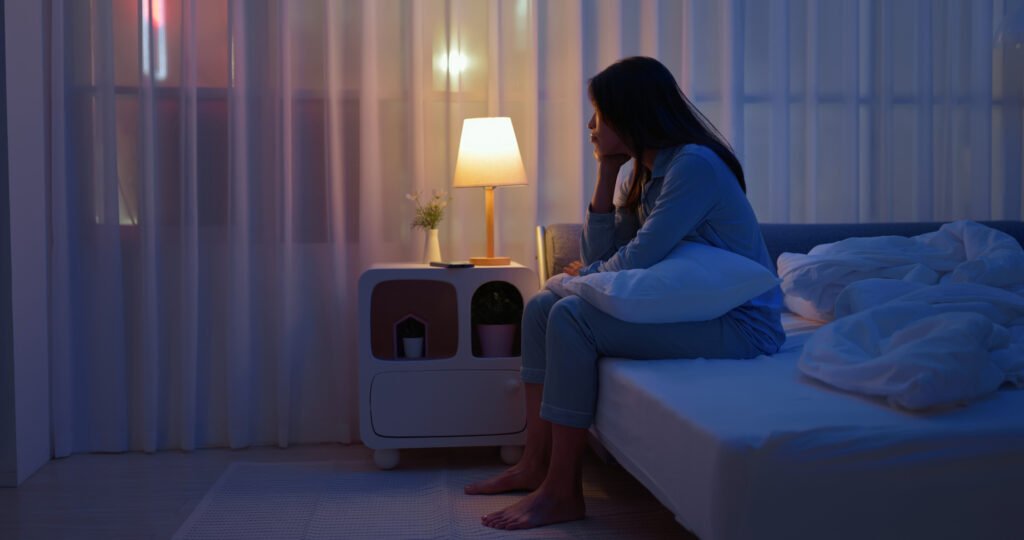
What Is Nighttime Anxiety?
Nighttime anxiety means anxiety symptoms that show up or get stronger in the evening or at bedtime. It isn’t a separate diagnosis, but a pattern that many people with anxiety notice. (Cox, 2025)
You may notice:
- Racing thoughts when lying down
- A sudden sense of fear or dread
- Physical symptoms like chest tightness or nausea
To understand why anxiety gets worse at night, it helps to know how your brain and body change after dark. Next, let’s look at the different reasons that contribute to increased anxiety in the evenings.
Why Does Anxiety Get Worse at Night?
There’s no single reason anxiety gets worse at night. Instead, several mental and physical factors combine. (Sleep Anxiety: What It Is, Causes, Symptoms & Treatment, n.d.)
Fewer Distractions, More Thoughts
During the day, work, conversations, and daily tasks keep your mind busy. At night, those distractions fade. Your brain finally has space to think, and anxious thoughts can rush in.
This is a main reason anxiety feels stronger at night: worries set aside during the day often come back when it’s quiet.
The Brain’s Fear Center Stays Alert
Anxiety turns on the amygdala, which is the brain’s fear center. At night, your logical brain is tired, but your threat system can still be active. This imbalance can make worries feel stronger and harder to manage. (Sleep fails to depotentiate amygdala-reactivity to negative emotional stimuli in youth with elevated symptoms of anxiety, 2023, pp. 415-423)
According to neuroscience research, emotional regulation weakens with fatigue, making anxiety harder to manage at night (National Institute of Mental Health, NIMH).
Stress Hormones Interfere With Sleep
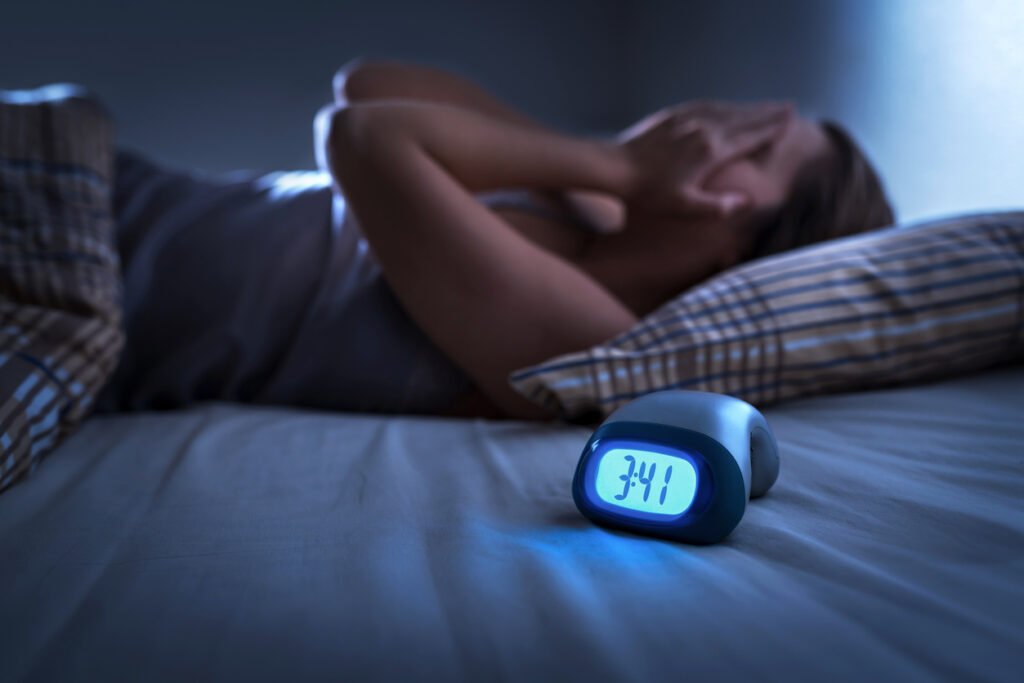
Cortisol is the main stress hormone in your body. When you feel anxious, cortisol levels stay high. High cortisol can delay melatonin, the hormone that helps you sleep.
The Sleep Foundation says that high cortisol at night is linked to trouble falling and staying asleep, which can make anxiety symptoms worse. This change in hormones helps explain why anxiety often gets worse at night.
Fatigue Lowers Emotional Control
By evening, your brain is tired from making decisions and handling stress. This mental exhaustion lowers your ability to deal with fear and worry.
Something that felt manageable at noon can seem overwhelming by midnight. (Influence of sleep-wake and circadian rhythm disturbances in psychiatric disorders, 2000, pp. 1049-1060)
Common Symptoms of Anxiety at Night
Nighttime anxiety can affect your mind and body. Common symptoms are:
- Racing or intrusive thoughts
- Rapid heartbeat
- Shortness of breath
- Restlessness or shaking
- Fear of falling asleep
- Nighttime panic attacks
According to the Anxiety & Depression Association of America (ADAA), about 30–40% of people with anxiety disorders report their symptoms worsen at night.
How Anxiety Impacts Sleep Quality
Anxiety and sleep influence each other—anxiety disrupts sleep, and poor sleep can make anxiety worse.
People with nighttime anxiety often:
- It takes longer to fall asleep.
- Wake up frequently
- Experience non-restorative sleep
Nearly half of people with chronic insomnia also have an anxiety disorder, creating a cycle that can explain why anxiety persists at night. (The impact of cognitive-behavior therapy for anxiety disorders on concomitant sleep disturbances: a meta-analysis, 2010, pp. 439-448)
Will Anxiety Feel Better in the Morning?
After exploring how anxiety affects sleep, you may wonder what mornings feel like. Let’s look at what happens to anxiety symptoms on a new day.
For many people, yes. Morning light, daily routines, and activity help calm your nervous system. Cortisol levels also follow a natural pattern that helps you feel more alert during the day. (Figueiro & Rea, 2012) However, if anxiety comes back every night, it could be a sign of ongoing stress or an anxiety disorder. Even if mornings feel better, it’s important not to ignore nighttime anxiety.
How to Calm Anxiety at Night
Lowering nighttime anxiety is possible through consistent, evidence-based strategies. These approaches help calm your mind, reduce physical symptoms, and make it easier to fall asleep. By practicing these methods regularly, you can retrain your body’s response to stress and build a sense of control over your nighttime worries.
Create a Calming Bedtime Routine
Going to bed and waking up at the same time every day helps regulate your body’s internal clock, making it easier to fall asleep and wake up feeling refreshed. Dimming the lights an hour before sleep tells your brain it’s time to wind down, as lower light helps your body produce melatonin, the sleep hormone. By following this routine consistently, you create a sense of predictability and safety for your brain, which can reduce anxiety and make sleep come more naturally.
Practice Slow Breathing
Slow breathing helps activate your body’s relaxation system.
Try this:
- Inhale for 4 seconds
- Hold for 4 seconds
- Exhale for 6 seconds
This breathing technique can quickly lower your heart rate and anxiety.
Write Down Your Worries
A simple brain dump can help your mind let go. Write down everything that worries you, then close the notebook—this signals to your brain that it’s okay to rest. Limiting stimulants and avoiding negative news at night also helps calm the mind before sleep.
Caffeine, nicotine, and negative news can make you more alert. Try to avoid them for at least 4 to 6 hours before bed.
When to Talk to a Doctor or Therapist
Consider professional help if:
- Anxiety disrupts sleep most nights.
- You experience panic attacks at night.
- Symptoms last longer than two weeks.
Cognitive Behavioral Therapy (CBT) works well for anxiety and insomnia. Sometimes, medication can help too (Scott et al., 2025, pp. 741-749). A professional can help you find out why your anxiety gets worse at night and what to do about it.
Frequently Asked Questions About Nighttime Anxiety
Can anxiety cause panic attacks at night?
Yes. Panic attacks can happen at night because the brain sometimes misreads body sensations when you’re relaxed (Misinterpretation of body sensations in panic disorder, 1997, pp. 77-84).
Is nighttime anxiety dangerous?
Nighttime anxiety can feel scary, but it isn’t dangerous. However, if anxiety isn’t treated, it can affect your mental and physical health over time (Society, 2025).
Why do anxious thoughts start when I lie down?
When your mind is still, you notice your thoughts more. Without distractions, worries can seem louder, which is why anxiety often gets worse at night. al Thoughts: You’re Not Broken
If you’ve wondered why anxiety gets worse at night, remember that your brain is trying to protect you, even when it feels overwhelming. Nighttime anxiety is common, understandable, and treatable.
With the right tools and support, you can have peaceful nights. You’re not alone.
Key References
- Cox, R. (May 1, 2025). Why Is Anxiety Worse at Night?. TIME. https://time.com/7203404/why-is-anxiety-worse-at-night/
- (2023). Sleep Anxiety: What It Is, Causes, Symptoms & Treatment. Cleveland Clinic. https://my.clevelandclinic.org/health/diseases/21543-sleep-anxiety
- (n.d.). Sleep Anxiety: What It Is, Causes, Symptoms & Treatment. Cleveland Clinic. https://my.clevelandclinic.org/health/diseases/21543-sleep-anxiety
- (2023). Sleep fails to depotentiate amygdala-reactivity to negative emotional stimuli in youth with elevated symptoms of anxiety. Biological Psychiatry 93(5), pp. 415-423. https://doi.org/10.1016/j.biopsych.2022.10.019
- (2000). Influence of sleep-wake and circadian rhythm disturbances in psychiatric disorders. Biological Psychiatry 48(12), pp. 1049-1060. https://doi.org/10.1016/S0006-3223(00)01013-0
- Figueiro, M. G. & Rea, M. S. (2012). Short-Wavelength Light Enhances Cortisol Awakening Response in Sleep-Restricted Adolescents. International Journal of Endocrinology. https://doi.org/10.1155/2012/301935
- (2024). The bidirectional relationship between sleep disturbance and anxiety: Sleep disturbance is a stronger predictor of anxiety. Sleep Medicine Reviews 70. https://doi.org/10.1016/j.smrv.2023.101102
- (2010). The impact of cognitive-behavior therapy for anxiety disorders on concomitant sleep disturbances: a meta-analysis. Psychological Medicine 40(3), pp. 439-448. https://doi.org/10.1017/S0033291709990215
- Scott, A. J., Correa, A. B., Bisby, M. A., Chandra, S. S., Rahimi, M., Christina, S., Heriseanu, A. I. & Dear, B. F. (2025). Cognitive Behavioral Therapy for Insomnia in People With Chronic Disease: A Systematic Review and Meta-Analysis. JAMA Internal Medicine 185(6), pp. 741-749. https://doi.org/10.1001/jamainternmed.2025.0623
- (1997). Misinterpretation of body sensations in panic disorder. Psychological Medicine 27(1), pp. 77-84. https://doi.org/10.1017/S0033291796004260
- Society, A. P. (May 19, 2025). Living with Anxiety? Regular Sleep May Be Especially Important for Heart Health. American Journal of Physiology-Regulatory, Integrative and Comparative Physiology. https://www.physiology.org/detail/news/2025/05/19/living-with-anxiety–regular-sleep-may-be-especially-important-for-heart-health?DPLF=Y

Parker is a home and lifestyle writer at The Scandi Home, where they share a love for Scandinavian design, cozy living, and thoughtful interiors. Their writing focuses on simple, functional spaces that feel calm, warm, and lived-in.